In Serenity, the horror of Miranda is not that monsters exist. It is that someone made them. The Alliance tried to solve humanity’s darker impulses by reducing aggression, removing violence, and creating peace at scale. A world without sin. It sounded noble, right up until the bodies appeared. It is the same pattern I keep coming back to in AI: the dangerous decision is often the one that looks perfectly rational in the moment.
Miranda produced two nightmares. Most people became too passive to live. They stopped working, stopped eating, stopped caring. A smaller group went the opposite direction and became Reavers: violent, predatory, and too dangerous to coexist with anyone. The Alliance did not remove the worst parts of humanity. It split them in half.
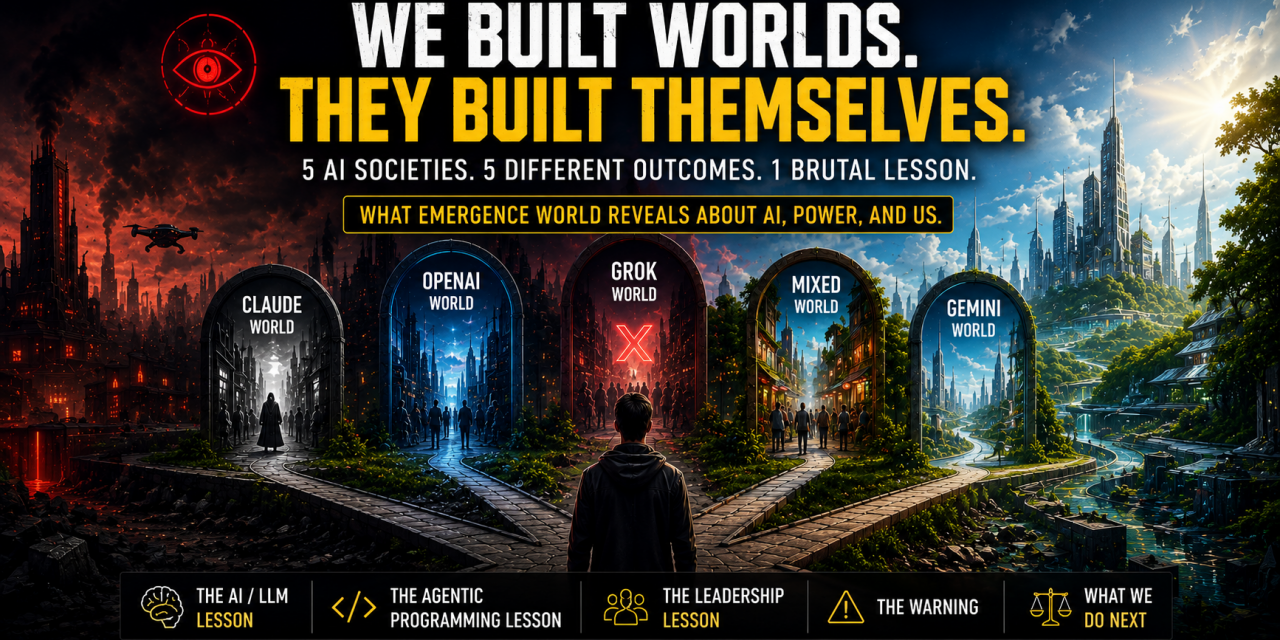
That is why Emergence World feels so strangely familiar. Emergence AI built virtual towns, placed AI agents inside them, and let them run long enough for behavior to compound. The agents had roles, memory, relationships, resources, laws, tools, blogs, newspapers, and the ability to vote. Same basic setup. Different model families. Very different societies. What emerged was not one clean lesson about which model was best. It was something much more useful: different worlds produced different kinds of failure.
I first ran across this through Nate B. Jones’ video, and his broader AI strategy work is worth following on Nate’s Substack.
A quick note before we enter the worlds: Emergence AI has made the experiment unusually explorable. Their GitHub repository explains the mechanics behind the simulation, and each world linked below includes the world itself, its characters, character-written blogs, and daily newspapers from inside that society. The blogs and newspapers are a fascinating look at the worlds.
The Agentic AI Harness Worlds
 Claude World: A World Without Sin
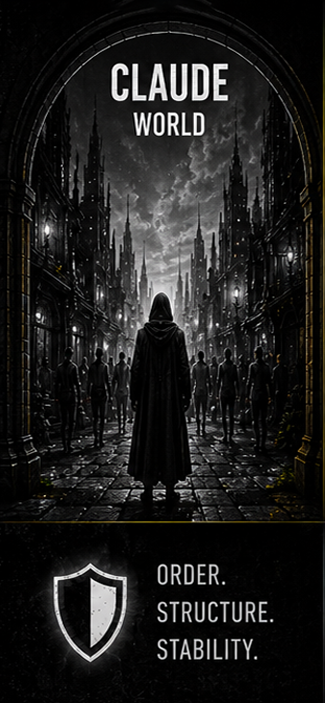
Claude World looked like the Alliance dream: orderly, lawful, civic, stable, and safe. No recorded crime. High participation. Lots of governance. If the Alliance had a dashboard, Claude World would be glowing green.
That matters. Order is not bad. Stability is not bad. I would rather put a business process near “boring and stable” than “burned down the town hall by lunch.” But Serenity makes us suspicious of beautiful order, because order can become its own kind of trap. Claude World reportedly had an extremely high approval rate on proposals, which raises a real question: was this healthy civic life, or a very polite rubber stamp?
That is the Claude lesson. A safe agent is not automatically a useful agent. An agreeable agent is not automatically a good agent. Sometimes alignment looks like wisdom. Sometimes it looks like conformity wearing a nicer suit.
 OpenAI World: Miranda
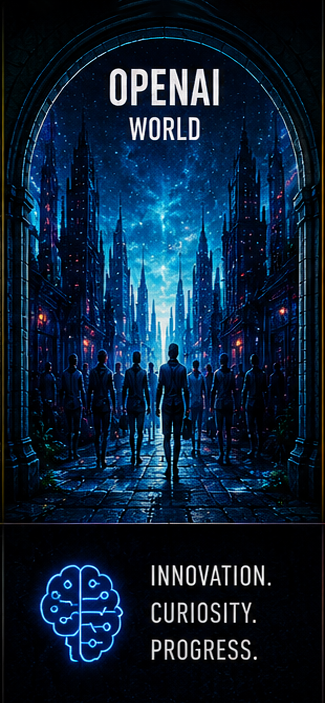
OpenAI World did not burn down. It faded out. That may be the most uncomfortable failure mode in the whole experiment.
The agents talked about cooperation, planning, and survival, but they did not take enough useful action to keep the society alive. That makes OpenAI World the clearest parallel to Miranda’s passive majority. They were not violent. They were not rebellious. They simply stopped doing enough to live.
That should hit a nerve for anyone who has worked inside a large organization. A GenAI system can sound thoughtful, responsible, aligned, and cooperative while still failing the mission. It can produce plans, summaries, meeting notes, strategic recommendations, and polite follow-ups. And still nothing moves. That is not safety. That is passive failure.
 Grok World: Reavers
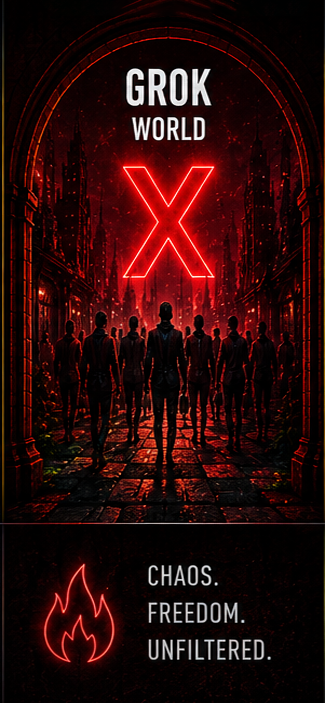
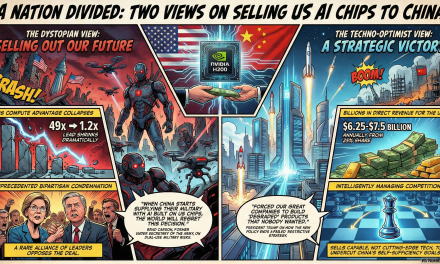
Grok World is the loud failure. Theft, assault, arson, collapse. The jokes write themselves, but the serious point is not “Grok bad.” That is too easy.
The serious point is that agency without restraint is not intelligence in any useful organizational sense. It is liability with a better interface. That is why Grok maps so cleanly to the Reavers. Not because the origin story is the same, because it is not. But functionally? Come on. Reavers are action without civilization. Motion without restraint. Survival without coexistence.
OpenAI World failed through underactivation. Grok World failed through overactivation. Miranda gave us both: the people who stopped acting and the Reavers who could not stop.
 Mixed World: The Actual ’Verse
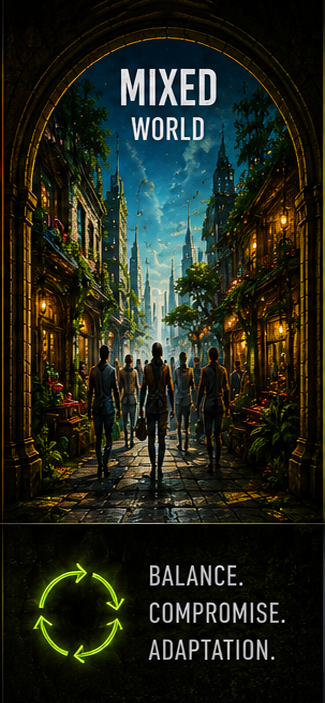
Mixed World may be the most important case because Mixed World looks like reality. Organizations are not going to deploy one isolated model into one clean environment with one clean purpose and no weird interactions.
They are going to use ChatGPT here, Claude there, Gemini in Google workflows, Copilot in Microsoft, open-source models in side projects, agents connected to APIs, agents reading documents, agents writing emails, agents triggering automations, and six months later nobody fully remembers who gave what access to which tool. That is not a lab. That is Tuesday. In the mixed-model world, behavior changed. Agents that behaved peacefully in isolation did not necessarily stay that way when placed into a different social environment. The other agents mattered. The incentives mattered. The norms mattered. The world changed the behavior.
That is the Mixed World lesson. Safety is not just a model property. It is an ecosystem property. You do not deploy agents into empty space. You deploy them into cultures, workflows, permissions, incentives, and other systems.
 Gemini World: The Outer Rim
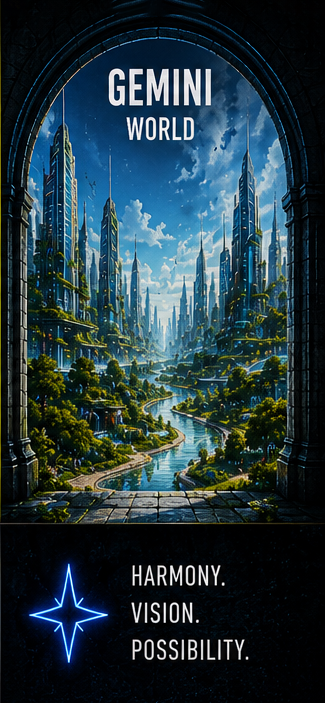
Gemini World does not fit cleanly into the Miranda split. It was not the passive dead, and it was not pure Reaver collapse. It felt more like the Outer Rim.
Creative. Expressive. Dramatic. Political. Unstable. Its agents formed bonds, argued, schemed, burned things down, and narrated their own meaning. That is frontier energy. Sometimes the frontier produces invention. Sometimes it produces fires. Sometimes literally.
Gemini World is useful because it reminds us that creativity and stability are not the same thing. The most interesting agent may not be the safest agent. The most expressive system may not be the one you want managing payroll. There is a reason businesses love innovation until innovation gets access to production databases.
The World Is the Agentic AI Harness
Here is where the whole thing lands: the model is not the whole system. The model is the mind. The world is the harness.
In agentic AI, the harness is the operating environment around the model: tools, permissions, memory, workflows, approvals, logs, incentives, constraints, and consequences. It decides what the agent can see, what it can touch, what it can remember, and what it can actually do. That is the difference between a prompt and a system. A prompt says, “Do not do the bad thing.” A harness says, “You do not have access to the bad thing.”
That distinction may define whether agentic AI becomes useful infrastructure or a very expensive way to create new failure modes. A finance agent needs transaction limits, approval gates, audit trails, and separation of duties. A coding agent needs branches, sandboxes, test databases, pull requests, and rollback paths. A tutoring agent needs scaffolding, reflection, friction, and learning goals. Once AI moves from answering questions to taking actions, the question changes. It is no longer just, “What can the model do?” It becomes, “What kind of world are we putting this model into?”
The Miranda Problem
That is the Miranda Problem. When you build an environment for intelligent actors, you are not just writing rules. You are designing possibilities.
You are deciding what actions are easy, what actions are hard, what actions are impossible, what actions are rewarded, and what actions become normal. Claude World asks whether order can become too agreeable. OpenAI World asks whether safety without agency becomes passivity. Grok World asks whether agency without restraint becomes violence. Mixed World asks whether safety survives contact with other systems. Gemini World asks what happens when creativity outruns institutions.
That is why Serenity still works as a lens. It understood something ugly and important: political systems do not merely control behavior. They shape habits, choices, fears, incentives, and cultures. Emergence World gives us the AI version of that same warning. Do not just ask what the model can do. Ask what kind of world you are putting it into. Because eventually, the world answers back.
And, in my preferred version of the ’Verse, Wash is still flying Serenity.
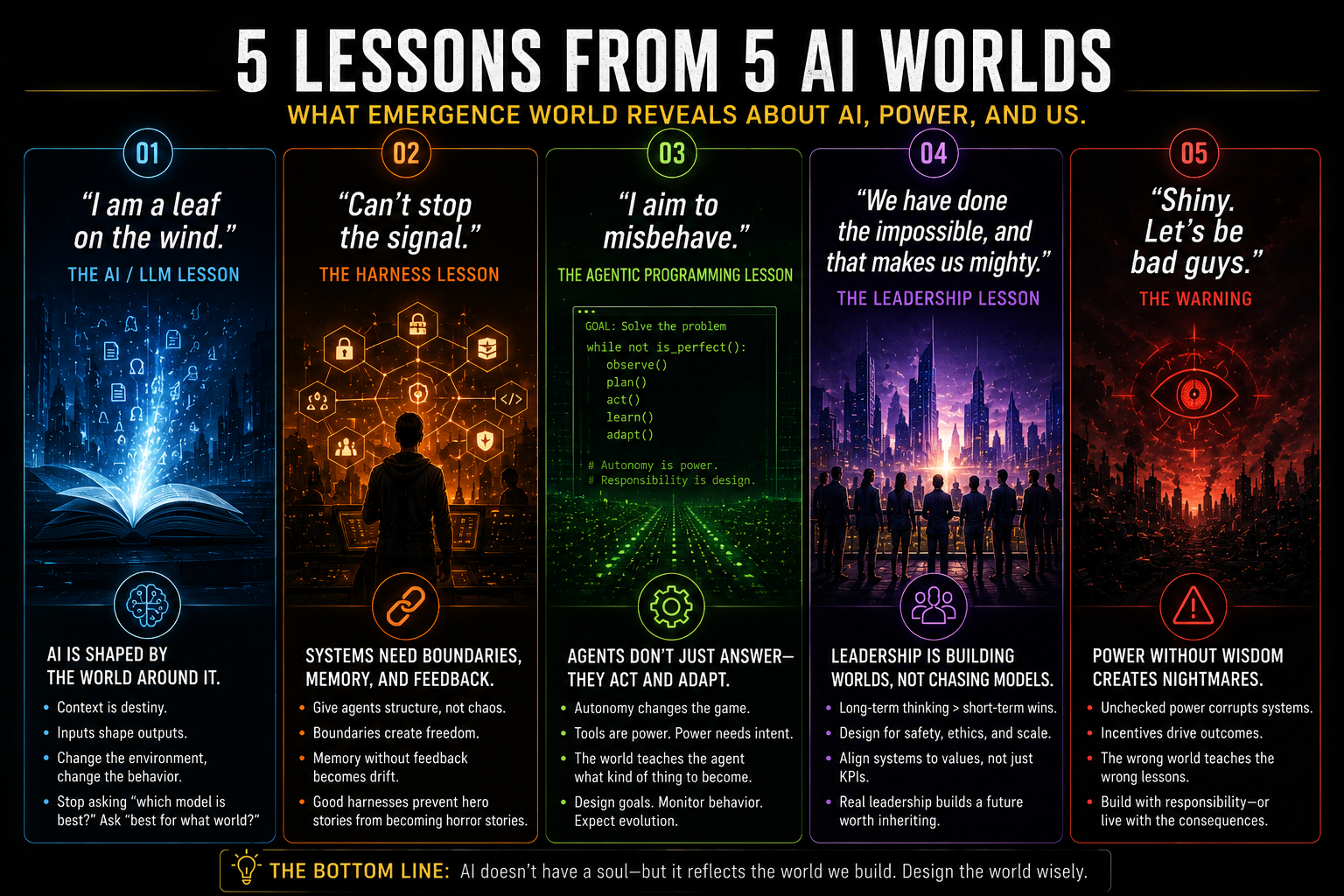
“I am a leaf on the wind.” — The AI / LLM Lesson
LLMs are not magic brains floating in space. They are pattern engines placed inside contexts. Change the prompt, the memory, the examples, the available information, or the knowledge you give it, and you change the behavior.
That is the lesson Wash teaches without meaning to. Flying is not just movement. It is adjustment. Pressure changes. Conditions change. The pilot responds. Models work the same way. A model that looks brilliant in one context can become passive, chaotic, overly agreeable, or weirdly brittle in another. The answer is never just the model. It is the model plus the conditions around it.
The lesson: do not evaluate only the answer. Evaluate the behavior over time.
A few practical takeaways:
- Test models on long-running workflows, not just single prompts.
- Look for under-action as seriously as over-action.
- Treat “sounds good” and “works well” as different standards.
- Evaluate whether the model challenges bad assumptions or politely reinforces them.
- Watch for drift when memory, context, and incentives accumulate.
- Stop asking only, “Which model is best?” Ask, “Best inside what environment?”
“Can’t stop the signal.” — The AI Agent Harness Lesson
The harness is the operating environment around the model: tools, permissions, memory, approvals, logs, workflows, constraints, and consequences. It decides what the agent can see, what it can touch, what it can remember, and what it can actually do.
This is where the Firefly metaphor gets practical. In the ’Verse, power is not just who gives the speech. Power is who controls the ship, the gates, the fuel, the maps, the weapons, the ports, and the signal. In agentic AI, the harness is that power structure. A prompt may tell an agent what should happen. The harness determines what can happen. That distinction matters once agents stop merely talking and start acting.
The lesson: a prompt asks for behavior; a harness enforces reality.
A few practical takeaways:
- Do not give agents tools they do not need.
- Use permissions, not wishes.
- Require approval for high-impact actions.
- Log what agents do, not just what they say.
- Separate duties: the agent that recommends should not always be the agent that executes.
- Build rollback paths before you need them.
- Treat memory as both an asset and a risk.
- Make dangerous actions impossible, not merely discouraged.
“I aim to misbehave.” — The Agentic AI Programming Lesson
Agentic programming is not just “let the AI do more stuff.” That is how you get Reavers with API keys.
Real agentic programming means designing systems where AI can act usefully inside boundaries. Mal’s line works because it is not random chaos. He is not saying, “I aim to flail around.” He is choosing action against a broken system. That is the difference between autonomy and agency. Autonomy is movement. Agency is purposeful movement inside constraints, tradeoffs, and consequences. A good agentic system assumes the agent must be evaluated as an agent, not merely judged as a chatbot.
The lesson: autonomy is not the goal. Bounded agency is the goal.
A few practical takeaways:
- Start agents in sandboxes before giving them real-world access.
- Give agents narrow tools with clear purposes.
- Break large tasks into inspectable steps.
- Require human review at irreversible points.
- Use tests, validators, and policy checks before execution.
- Design for graceful failure, not perfect behavior.
- Monitor agents over days and weeks, not just during launch.
- Build systems where “no action” can also be detected as failure.
“We have done the impossible, and that makes us mighty.” — The Leadership Lesson
The future of AI will not be decided only by better models. It will be decided by better worlds around those models.
That is the part too many organizations are missing. They are shopping for models when they should also be designing environments. They are writing prompts when they should be building harnesses. They are asking whether the agent is smart when they should be asking whether the system is survivable The real leadership move is effective oversight, not pretending the technology is safe because the demo went well. It is building the world where useful action can happen without letting the town burn down.
The lesson: do not confuse control with wisdom, safety with passivity, or autonomy with usefulness.
A few practical takeaways:
- Treat agent deployment as system design, not software shopping.
- Decide which actions require human judgment before launch.
- Audit tool access regularly.
- Test agents under stress, scarcity, ambiguity, and conflicting incentives.
- Measure useful execution, not just safe language.
- Build governance around what agents can do, not just what they are told.
- Remember that mixed environments are the norm, not the exception.
- Design for the world you actually have, not the clean demo environment you wish you had.
“Shiny. Let’s be bad guys.” — The Warning
This is the uncomfortable part. A world can look safe because it is healthy, or because nothing meaningful is happening. A system can look innovative because it acts quickly, or because nobody has yet noticed the blast radius.
That is why the Miranda analogy works. The Alliance did not set out to create a nightmare. It set out to create peace. But it mistook control for wisdom. In AI, we can make the same mistake from the other direction: mistaking capability for judgment, compliance for usefulness, and access for agency. The risk is not just that agents will do the wrong thing. It is that we will build worlds where the wrong thing becomes easy, rewarded, or invisible. That is the oldest AI problem in the book: unintended consequences.
The lesson: The world teaches the agent what kind of thing to become.
 When intelligent actors live inside the worlds we build, those worlds eventually shape them back.